• Mon – Fri: 8 am – 5 pm | Sat & Sun: Closed
Our services

Ultrasounds

Ultrasounds

Overview

Clear, safe imaging for your gynaecological health and your pregnancy. Ultrasound is a common imaging test used to investigate gynaecological conditions in women and, in obstetrics, to see your unborn baby. If you need an ultrasound, the specialist team at Minerva Women's Healthcare can help. To schedule an appointment, call our office or request an appointment online today.

At a glance

  • Ultrasound uses high-frequency sound waves to create images of the inside of your body. It does not use radiation.
  • It is used to investigate gynaecological problems and to monitor pregnancy.
  • Most scans need little or no preparation, but some need a full bladder.
  • The scan is quick and painless, with no downtime afterwards.
  • Your doctor reviews the results with you and explains the next steps.

What is an ultrasound?

Ultrasound scanning uses high-frequency sound waves to produce images of the inside of your body. The images show structures and movement, as well as blood flowing through your blood vessels. We use ultrasound to detect or rule out gynaecological problems and to look at your baby during pregnancy.

Is an ultrasound right for me?

After reviewing your medical history and symptoms and carrying out a physical exam, your doctor will advise whether you need an ultrasound. It may be recommended to:
  • Evaluate the pelvis, ovaries, tubes and uterus
  • Identify fibroids or ovarian cysts
  • Find the cause of pelvic pain or abnormal bleeding
  • Confirm the correct position of an intrauterine device (IUD)
  • Confirm and date your pregnancy
  • Detect a miscarriage or ectopic pregnancy
  • Check your baby's heart
  • Find out how many babies you are carrying
  • Check for birth defects
  • Assess your baby's growth and wellbeing
  • Determine your baby's sex, when appropriate
  • Check your cervix after preterm labour
  • Assess the amniotic fluid and the placenta
Even when an ultrasound is not medically necessary, you may wish to see your baby at certain points in your pregnancy. Ask us about this.

Types of ultrasound

Abdominal ultrasound: A hand-held device called a transducer is moved over gel on your lower abdomen. This is common in pregnancy and for looking at the pelvis.

Transvaginal ultrasound: A slim transducer is gently placed in the vagina. It gives a closer view of the uterus, ovaries and early pregnancy, and is often used when pelvic problems are suspected.

What should I expect?

Most of the time, no special preparation is needed. Occasionally, we may ask you not to eat or drink beforehand, or to arrive with a full bladder. Wear comfortable clothing, and you may be asked to remove jewellery.

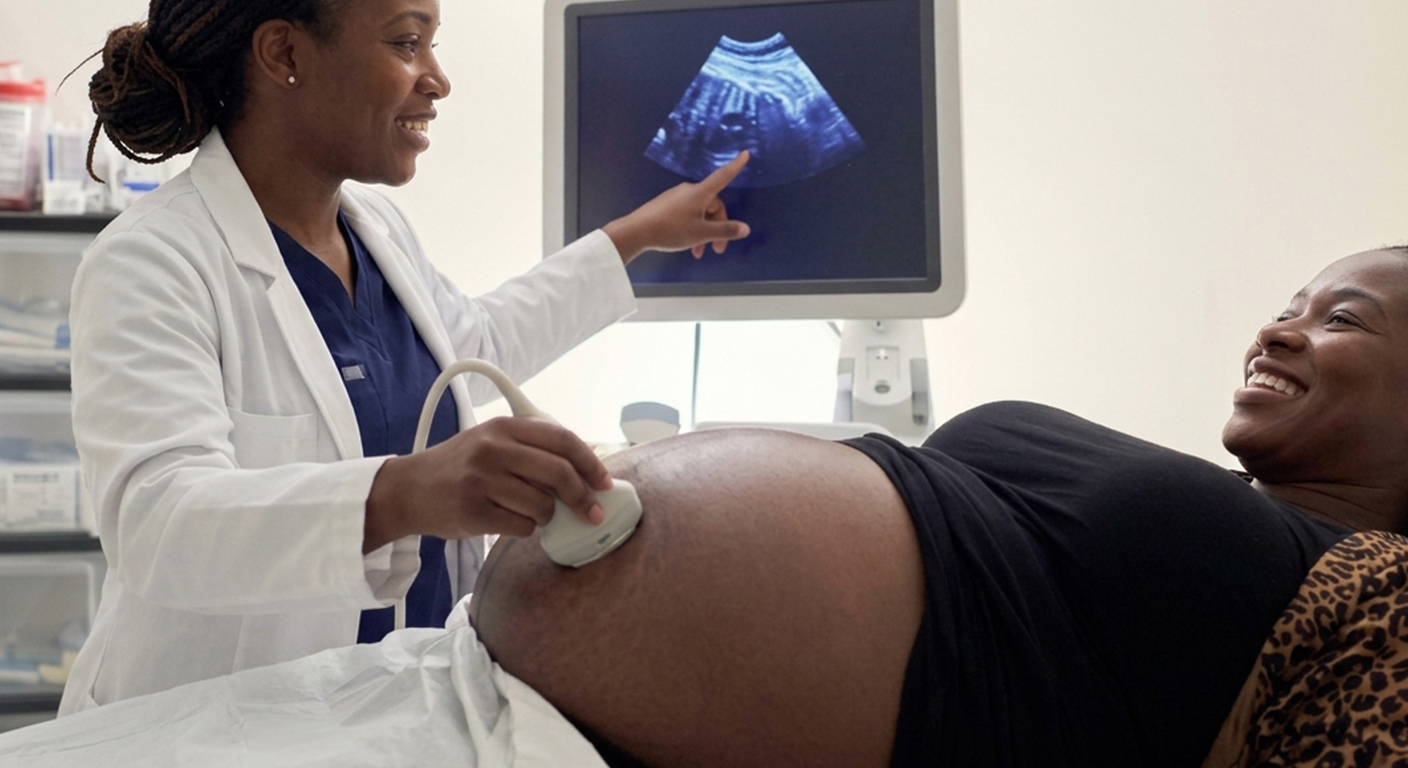
For an abdominal scan, your doctor applies gel to your lower abdomen and moves a transducer across your skin to produce images. For a transvaginal scan, a small transducer is placed gently in the vagina. You can ask for a chaperone for any exam.

Ultrasounds are quick and painless, although a full bladder or the transvaginal probe may feel slightly uncomfortable. There is no downtime afterwards. Your appointment usually lasts about 30 to 60 minutes.

What do my results mean?

Your doctor will go through your ultrasound results with you. They will tell you if you need further tests, a procedure, or treatment for a gynaecological condition or a pregnancy concern.
If your results are normal, no additional treatment is needed. You should still attend your routine well-woman exams or prenatal visits to stay healthy and reduce the risk of complications.

Common questions

Is ultrasound safe in pregnancy?

Yes. Ultrasound uses sound waves, not radiation, and is considered safe for you and your baby when performed for medical reasons by trained professionals.

How soon can I have a pregnancy scan?

Usually from about six weeks, though we will advise the best timing for you. If you have bleeding or severe pain in early pregnancy, contact us promptly.

Can I find out my baby's sex?

Often yes, usually from the mid-pregnancy scan, depending on your baby's position. Let us know if you do or do not want to know.

Can I bring someone with me?

Usually yes. Ask us when you book.

Ready to see the doctor?

Book a private one-on-one consultation online or in person. Pay now or pay later.