
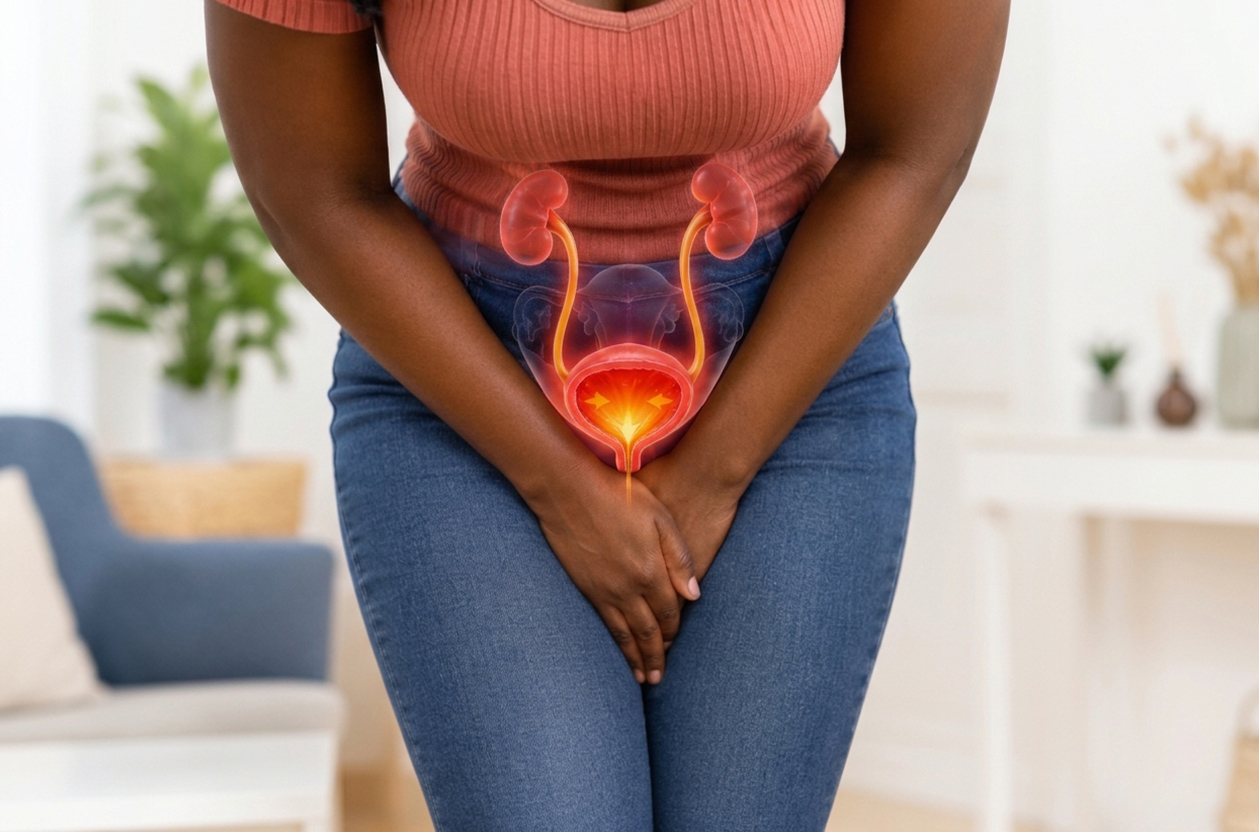
Overactive Bladder
Overview
At a glance
- Overactive bladder is a group of symptoms, mainly a sudden urge to urinate that is hard to control
- It is common, it is not something to be embarrassed about, and it can be treated
- It is different from stress incontinence, which is leakage during activity such as coughing or exercise
- Many women improve with simple measures such as bladder retraining, pelvic floor exercises and changes to drinks
- Medicines and other treatments are available when simple measures are not enough
What are the symptoms of overactive bladder?
- A sudden urge to urinate that you cannot control
- Leaking urine when you feel the urge
- Urinating many times during the day
- Waking several times during the night to urinate
What causes overactive bladder?
- Urinary tract infections
- Menopause-related changes in the tissues of the vagina and urethra
- Diabetes
- Bladder stones or other bladder problems
- Some medicines, including water tablets (diuretics)
- Too much caffeine, alcohol or fluid
How is it diagnosed?
How is overactive bladder treated?
We offer a range of treatments, and your doctor will recommend the one that best suits your symptoms, lifestyle and needs.
Lifestyle changes: Cutting back on bladder irritants such as caffeine, fizzy drinks and alcohol, managing fluid intake, and maintaining a healthy weight may be enough to calm your bladder.
Pelvic floor exercises: Targeted exercises strengthen the muscles that support your bladder and help you control the urge.
Bladder retraining: You learn to hold urine for longer when you feel the urge, gradually training your bladder to hold more.
Medicines: Medicines can relax the bladder muscle and reduce urgency. Where appropriate, your doctor may also suggest local oestrogen treatment for menopausal tissue changes.
Common questions
Is overactive bladder a normal part of ageing?
It becomes more common with age, but it is not something you have to accept. Treatment can help at any age.
What is the difference between overactive bladder and stress incontinence?
Overactive bladder involves a sudden, strong urge to urinate. Stress incontinence is leakage when pressure on the bladder rises, for example when you cough, sneeze or exercise. Some women have both, and the treatments differ.
Do I need to drink less water?
Not necessarily. Drinking too little can irritate the bladder. We will advise on the right amount for you, and on cutting back on drinks in the evening if you wake at night.
When should I see a doctor urgently?
Please see us promptly if you have burning when passing urine, blood in the urine, fever, pain in the side or back, or sudden new symptoms.
