
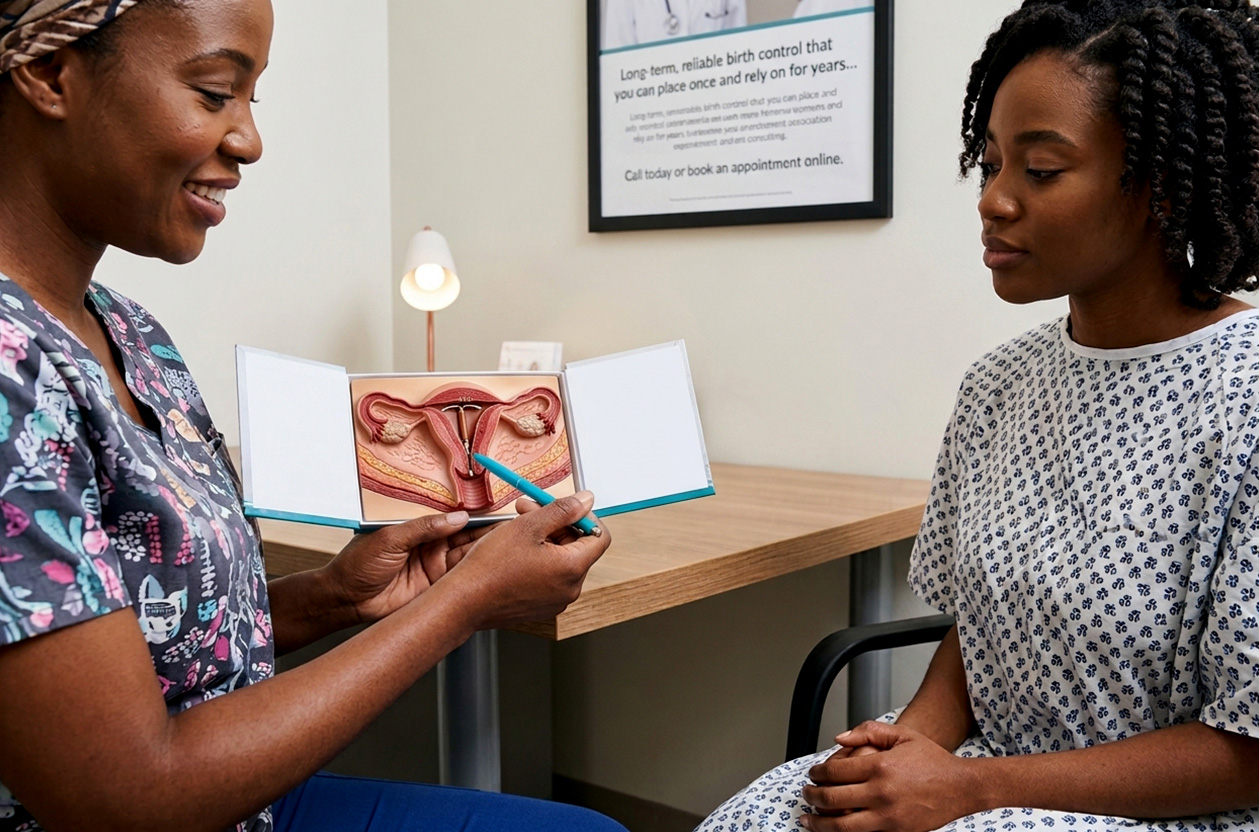
IUD
Overview
At a glance
- An IUD is a small, T-shaped device placed in the uterus by a doctor to prevent pregnancy.
- It is one of the most effective forms of birth control, with a failure rate of less than 1 in 100.
- There are two types: hormonal IUDs and copper IUDs.
- It lasts for years, and you can have it removed at any time if you want to become pregnant or change method.
- It does not protect against sexually transmitted infections (STIs), so condoms are still advised if you are at risk.
What is an IUD?
How do the two types work?
Hormonal IUD: This type releases a small amount of progestin each day. It prevents pregnancy by thickening the mucus in your cervix, so sperm cannot reach an egg, and by thinning the lining of the womb. It may also reduce ovulation in some women. Depending on the type, it lasts for up to three to eight years and then must be removed and replaced if you want to continue.
Copper IUD: This type is wrapped in copper, which creates an environment that is toxic to sperm. This prevents sperm from fertilising an egg. It contains no hormones and can last for 10 years or more before it needs replacing. It can also be used as emergency contraception if placed within five days of unprotected sex.
Hormonal IUDs may also help to lighten heavy periods and ease period pain, so your doctor may recommend them for these reasons too.
Is an IUD safe and effective?
Who can use an IUD?
What are the possible side effects?
- Acne
- Headaches
- Breast tenderness
- Changes in the length and frequency of your periods, including lighter periods or no periods
- Spotting in the first few months
- Heavier periods than normal
- Longer periods
- Cramps or backache outside your periods
What happens during insertion?
When should I contact you?
Common questions
Does an IUD hurt?
Many women feel cramping during insertion, which settles quickly. Ask us about pain relief.
Will an IUD affect my future fertility?
No. Fertility generally returns soon after removal.
Can I use an IUD if I have never had a baby?
Yes, in most cases.
Can I feel the IUD?
You should not feel it. The thin strings sit in the vagina, and we will show you how to check them if you wish.
Ready to discuss an IUD?
Schedule a visit with Minerva Women's Healthcare to talk about IUDs and other birth control options. Call our office or book online. It takes about a minute, and no account is needed.
