
Our services
Endometriosis
Overview
Understanding painful periods, getting a diagnosis and finding relief. If your menstrual cramps are severe, or come with nausea, heavy bleeding or other symptoms, you may have endometriosis. It is thought to affect about one in ten women of reproductive age. At Minerva Women's Healthcare, our team diagnoses endometriosis, with or without symptoms, and takes your plans for future pregnancy into account when planning your treatment. Call our office or use our online booking tool today to find relief from your pain.
At a glance
- Endometriosis is a condition in which tissue similar to the lining of the uterus grows outside the uterus
- It can cause severe period pain, pain during sex, heavy bleeding, fatigue and bowel or bladder symptoms
- Some women have severe symptoms, while others have few or none
- It can make it harder to get pregnant, but many women with endometriosis conceive
- Treatment is tailored to your symptoms and your plans for pregnancy
What is endometriosis?
Endometriosis is a long-term, often painful condition that can begin from puberty onward. It is most commonly diagnosed in women aged 15 to 44, but it can occur at any age after periods start. It can make it harder to become pregnant and can make sex uncomfortable.
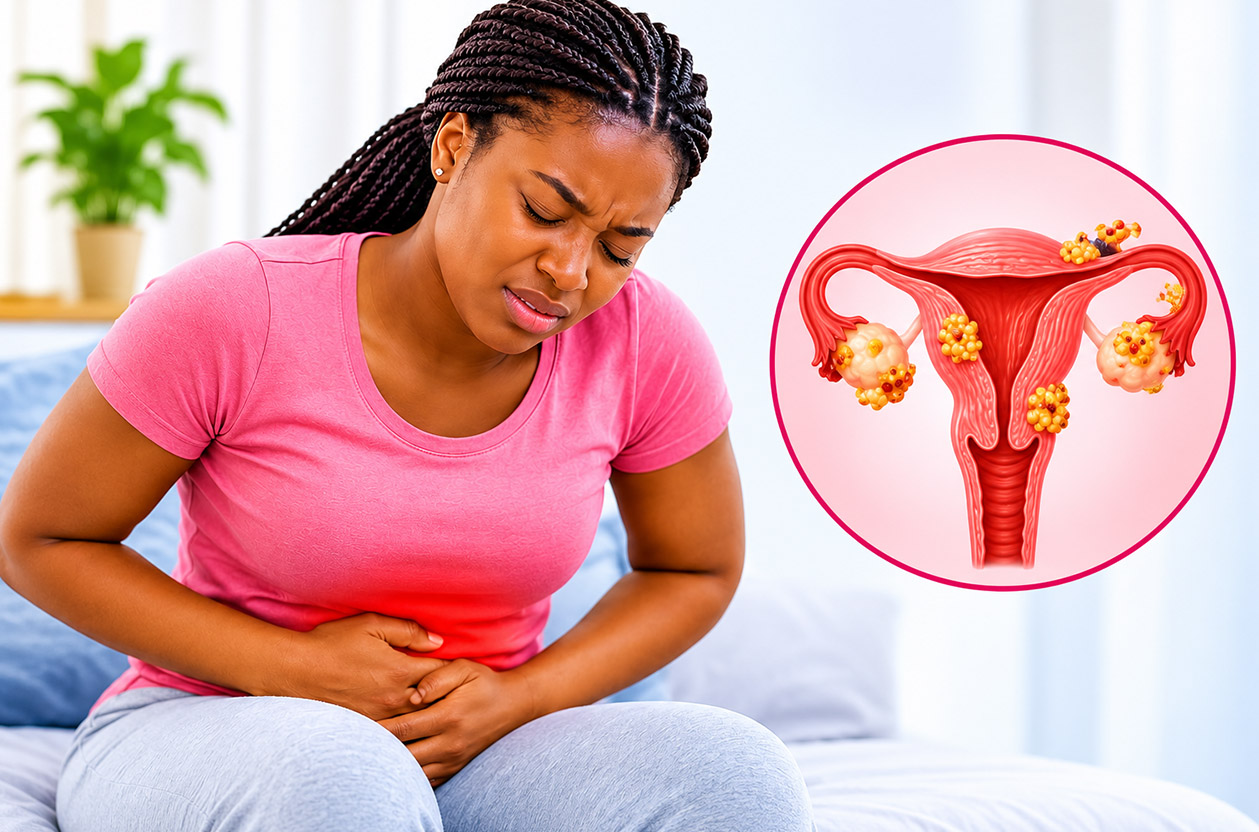
To understand endometriosis, it helps to know about the structure of your reproductive system. Your uterus, which holds a baby during pregnancy, is lined with a layer of tissue called the endometrium. Each month, this lining builds up and then sheds as your period.
In endometriosis, tissue similar to the endometrium grows outside the uterus, often on the ovaries and fallopian tubes. In more severe cases, it can spread beyond the reproductive organs, for example to the bowel or bladder. This tissue responds to your monthly hormones, so it can cause pain, inflammation and scar tissue.
What are the symptoms?
Endometriosis can cause a wide range of symptoms. For some women it causes severe pain, and others feel little or no discomfort. Symptoms may include:
- Severe menstrual cramps
- Pain during sex
- Heavy bleeding during or between periods
- Pain when passing urine or opening your bowels
- Fatigue
- Diarrhoea or constipation
- Bloating and nausea
Symptoms often get worse around your period. It is normal to have some cramps or bloating during a period, but endometriosis tends to make them more intense. If pain keeps you from school, work or daily life, or you are unsure what is causing your symptoms, see us for a diagnosis. Many women live with endometriosis for years before it is recognised, so please do not wait.
What are the risk factors?
Experts are not certain why some women develop endometriosis, but certain factors may increase your risk:
- Having a close relative with endometriosis
- Starting your periods at an early age
- Short menstrual cycles or heavy periods
- Never having given birth
- Being underweight
- Abnormalities of the reproductive tract
Pregnancy and menopause tend to ease endometriosis symptoms.
How is endometriosis diagnosed?
We start by listening to your symptoms and reviewing your medical history, followed by a pelvic exam. An ultrasound scan may show cysts on the ovaries or other signs, and in some cases further imaging is used. Endometriosis can only be confirmed for certain by keyhole surgery (laparoscopy) with a tissue sample, which we recommend only when needed.
How is endometriosis treated?
Treatment depends on your symptoms, how severe they are and whether you plan to become pregnant. Options may include:
Pain relief: Over-the-counter or prescribed pain medicines, and heat, can ease cramps.
Hormonal treatment: If you do not want to become pregnant right now, hormonal contraception, such as the pill or a hormonal IUD, can reduce pain and bleeding. Other hormone medicines, such as GnRH medicines, can pause ovulation and reduce the activity of endometriosis for a limited time.
Surgery: For more severe cases, or when other treatments have not worked, keyhole surgery can remove or treat endometriosis tissue and scar tissue.
Fertility support: If you want to become pregnant, we will plan your treatment around that goal. This may include timing advice, ovulation treatment or referral for assisted reproduction.
We will talk through every option, including benefits and side effects, so you can choose what is right for you.
Common questions
Does endometriosis mean I cannot have children?
No. Endometriosis can make it harder to conceive, but many women with endometriosis get pregnant, with or without treatment.
Are painful periods normal?
Mild cramps are common, but pain that is severe, keeps you from your normal activities or is getting worse is not something you have to accept.
Can endometriosis be cured?
There is no cure, but symptoms can be controlled very effectively with treatment.
Does endometriosis turn into cancer?
Endometriosis is not cancer, and the risk of cancer is low. Please attend your routine check-ups.
Ready to find relief?
Book your endometriosis evaluation with Minerva Women's Healthcare online or by calling our office. It takes about a minute, and no account is needed.
