
Minimally invasive surgery
Overview
At a glance
- Minimally invasive surgery uses small cuts, or no cuts at all, instead of one large incision
- Benefits can include less pain, less blood loss, a shorter hospital stay and a faster recovery
- Common techniques include laparoscopy (keyhole surgery) and hysteroscopy
- It is used to treat conditions such as endometriosis, fibroids, ovarian cysts and prolapse
- Not every condition can be treated this way. Your surgeon will recommend the safest option for you
What is minimally invasive surgery?
What types of minimally invasive surgery do we offer?
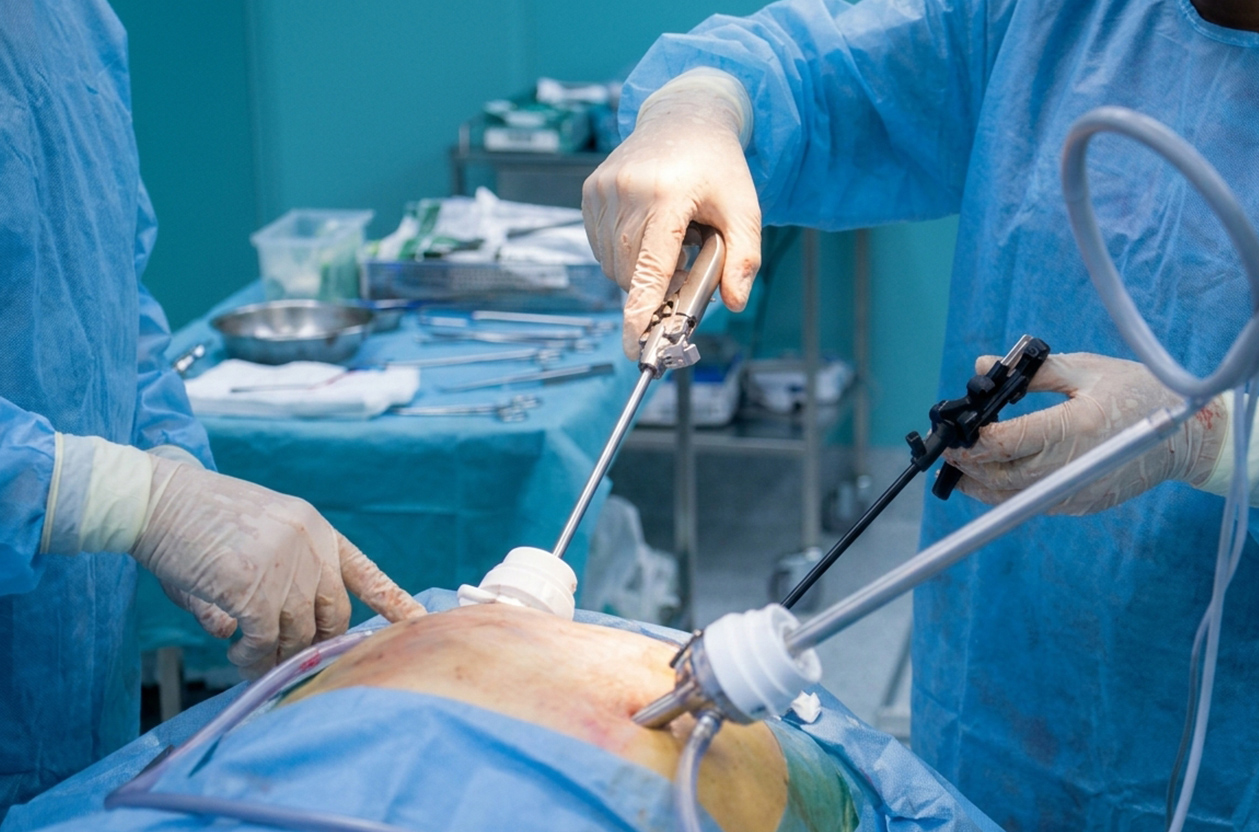
Laparoscopy: Laparoscopy is keyhole surgery, usually done as a day case. A laparoscope, a slim instrument with a camera, is inserted through a tiny cut in your abdomen and sends images to a screen. This gives your surgeon a clear, real-time view of your uterus and pelvis without a large incision. Surgical instruments are passed through one or more other small cuts. You are usually asleep during the whole procedure, and many women go home the same day.
Hysteroscopy: A thin camera is passed through the vagina and cervix to see inside the uterus, with no cuts at all. It is used to diagnose and treat problems such as polyps, some fibroids and abnormal bleeding.
What conditions can be treated?
- Endometriosis
- Fibroids
- Ovarian cysts
- Permanent sterilisation (tubal ligation)
- Pelvic adhesions
- Ectopic pregnancy
- Hysterectomy, in suitable cases
What are the benefits?
- Smaller cuts and less scarring
- Less pain
- Less blood loss
- A shorter hospital stay
- A lower risk of wound infection
- A faster recovery, with an earlier return to your daily activities
Is minimally invasive surgery right for me?
What should I expect?
Before surgery: Follow your surgeon's instructions on eating, drinking and medicines, and arrange for someone to take you home.
During surgery: You are usually asleep under general anaesthesia. The surgeon makes small cuts, inflates the abdomen gently with gas to create space, and carries out the procedure.
After surgery: Many women go home the same day or the next day. You may have some shoulder-tip pain from the gas, mild soreness and bloating for a few days. Rest, take your medicines as prescribed and avoid heavy lifting until your surgeon says it is safe.
Common questions
Will I have scars?
Small ones, usually, and they fade over time.
How long will recovery take?
It depends on the operation. Many women return to light activity within days to a couple of weeks, but major procedures take longer.
Is it as effective as open surgery?
For many conditions, yes. Your surgeon will advise whether it is the right option for your condition.
Are there risks?
All surgery has risks, including bleeding, infection, injury to nearby organs and anaesthetic complications. We will explain these before you decide.
Ready to learn more?
If you are exploring alternatives to open surgery, call Minerva Women's Healthcare or book a consultation online. It takes about a minute, and no account is needed.
