
Our services
Fibroids
Overview
Understanding uterine fibroids, their symptoms and your treatment options. If your periods are lasting longer than usual, or your flow has recently become heavier, fibroids might be the cause. The specialists at Minerva Women's Healthcare are committed to diagnosing and treating gynaecological problems, including fibroids, with skill, compassion and a genuine patient-first attitude. Schedule a visit today by calling our office or requesting your appointment online.
At a glance
- Uterine fibroids are noncancerous growths in or on the wall of the uterus.
- Many women have fibroids without any symptoms.
- When they cause symptoms, these often include heavy or long periods, pelvic pressure and frequent urination.
- Fibroids do not increase your risk of uterine cancer, and they very rarely become cancerous.
- Treatment ranges from watchful monitoring to medicines and procedures that can preserve your uterus.
What are uterine fibroids?
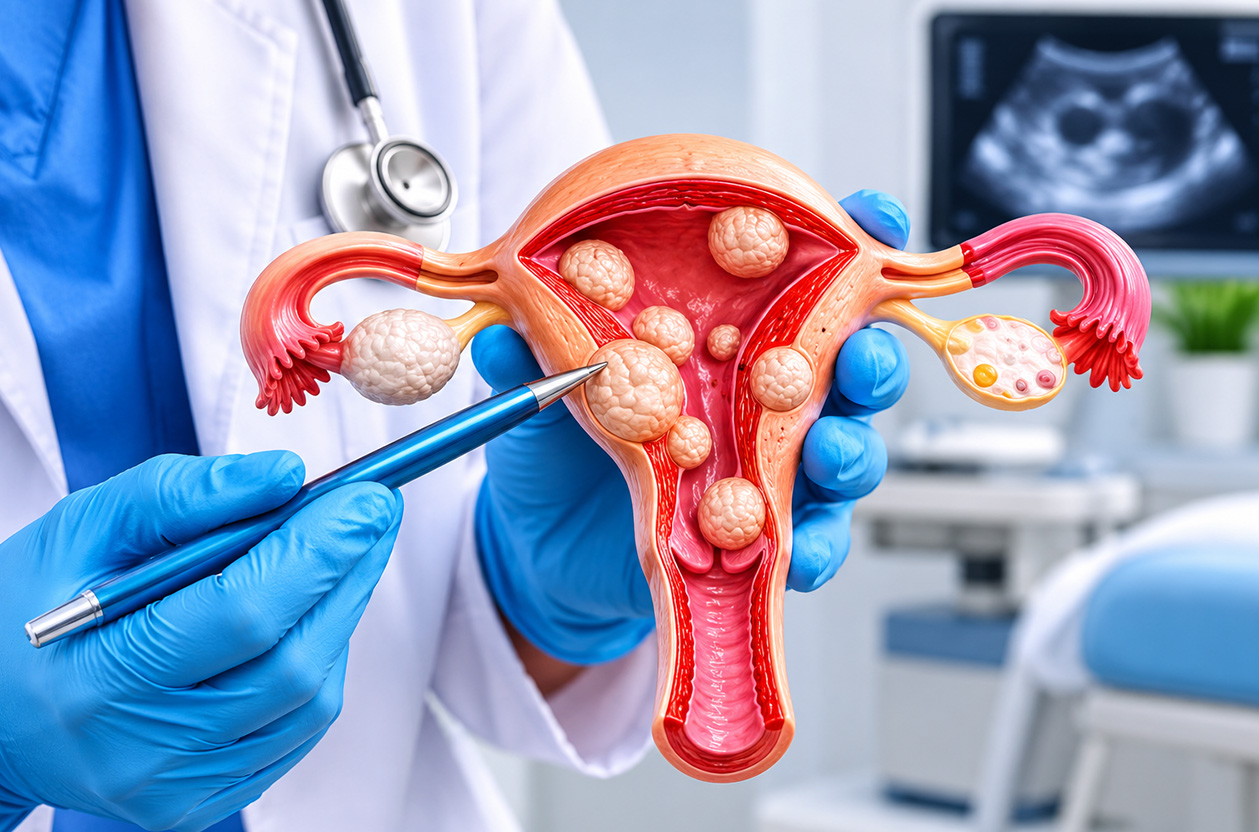
Uterine fibroids are abnormal growths that can develop within or on the surface of your uterus. They are made of smooth muscle cells and fibrous connective tissue. Fibroids do not increase your risk of developing uterine cancer, and they rarely become cancerous. Fibroids can be tiny, too small to see with the naked eye, or large enough to change the shape and size of your uterus. You may have one fibroid or several. They develop during your childbearing years and often start causing symptoms at around age 30.
What are the symptoms?
Many women have fibroids and never notice a symptom. Depending on their size and location, fibroids can cause:
- Heavy menstrual bleeding, or periods lasting more than a week
- Spotting, sometimes heavy, between periods
- Pain or a feeling of pressure in the pelvis
- Frequent urination and difficulty emptying your bladder
- Constipation
- Lower back ache and leg pain
Heavy bleeding can lead to anaemia, with tiredness, dizziness and breathlessness. Let us know if you notice these.
What types of fibroids are there?
Fibroids can develop in different parts of the uterus:
Intramural fibroids: Grow within the muscular wall of the uterus.
Submucosal fibroids: Bulge into the uterine cavity. These are the most likely to cause heavy bleeding and fertility problems.
Subserosal fibroids: Grow outward from the surface of the uterus and can press on nearby organs.
Depending on their size and location, fibroids can affect your ability to conceive or make it harder to carry a pregnancy to full term.
How are fibroids diagnosed?
We begin with a review of your symptoms and a pelvic exam. We then use ultrasound and, where needed, other tests to show the exact size and position of your fibroids. Blood tests may check for anaemia.
How are fibroids treated?
If your fibroids are not causing symptoms or problems, it is safe to watch them over time. Fibroids often shrink, and symptoms often settle, after menopause.
For fibroids that cause symptoms, treatment depends on your symptoms, the size and position of the fibroids, your age and whether you want to have children. Options may include:
Medicines to reduce bleeding: Hormonal contraceptives and other medicines can lighten heavy periods. Iron supplements can treat anaemia.
Medicines that shrink fibroids: Gonadotropin-releasing hormone (GnRH) medicines can shrink fibroids by creating a temporary, menopause-like state. They are usually used for a limited time, such as before surgery.
Procedures that preserve the uterus: Myomectomy removes the fibroids and keeps the uterus, and can be done by keyhole, hysteroscopic or open surgery depending on the fibroids. Other options, such as focused ultrasound or uterine artery embolisation, may be available through referral.
Hysterectomy: Removal of the uterus is a permanent solution that may be considered when other treatments have not worked and you do not wish to have more children.
We will discuss every option in detail, including benefits, risks and effects on fertility, before you choose the one that suits you.
Common questions
Are fibroids cancer?
No. Fibroids are noncancerous, and they very rarely become cancerous.
Can fibroids affect pregnancy?
Sometimes. Depending on their size and position, they may make it harder to conceive or carry a pregnancy to term. Tell us if you are planning a pregnancy.
Will fibroids go away on their own?
They often shrink after menopause, but they usually do not disappear without treatment during your reproductive years.
Do I always need treatment?
No. If your fibroids are not causing problems, we may just monitor them.
When should I contact you urgently?
Seek urgent care for sudden severe pelvic pain, very heavy bleeding that soaks through pads quickly, or dizziness or fainting.
Ready to be evaluated for fibroids?
Schedule a visit with Minerva Women's Healthcare for an evaluation of fibroids or any other gynaecological concern. Call our office or book online. It takes about a minute, and no account is needed.
